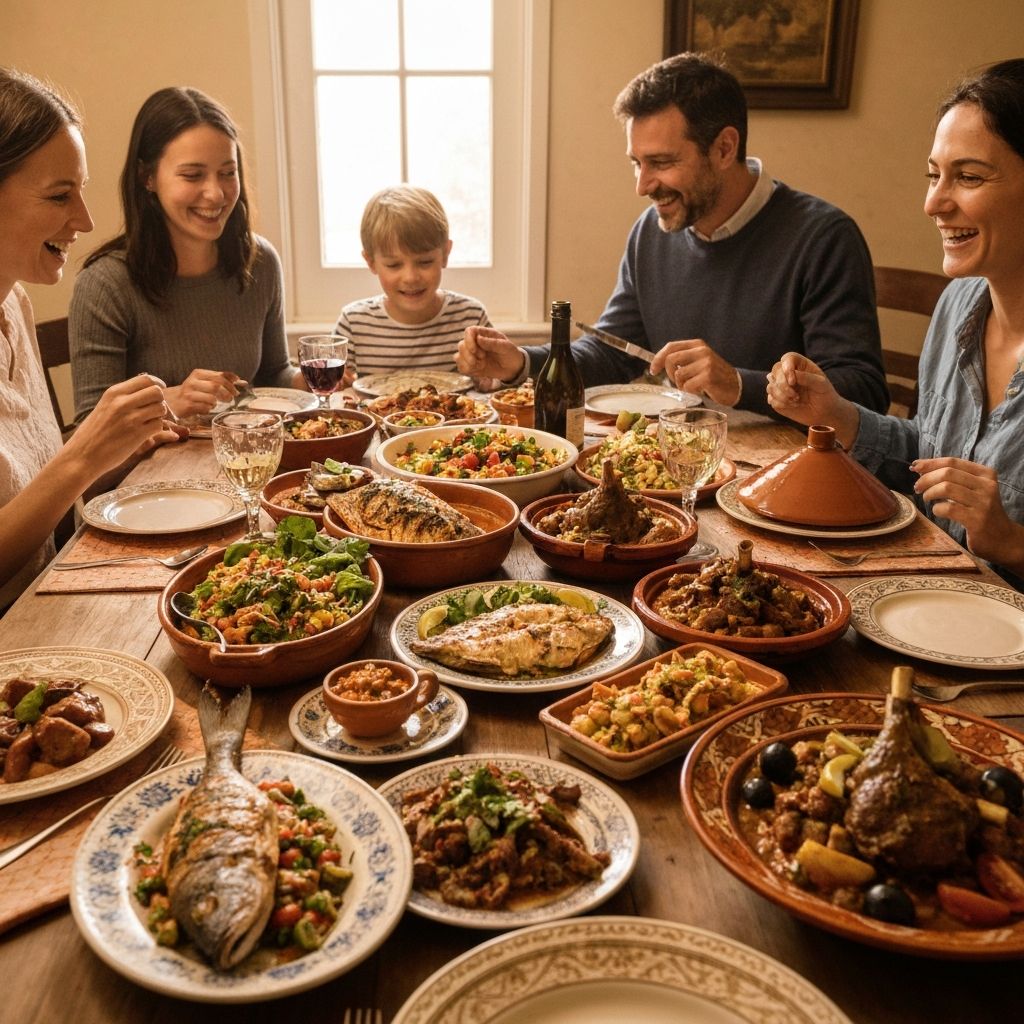
Meals as Social Events
In traditional Mediterranean societies, meals were not merely occasions for consuming food. They were social events where families gathered, conversations occurred, relationships were maintained, and community bonds were strengthened. The midday meal, in particular, held special significance as the main family gathering of the day.
The ritual of sitting together for meals represented important social practice. The physical act of sharing food created and reinforced family and community connections. Time spent eating was time invested in social relationships.
Family Dining Practices
Mediterranean family dining traditions emphasized several elements. Meals were unhurried, with sufficient time allocated for eating and conversation. Multiple family members participated in meal preparation, with cooking representing shared work. The table became a space for family interaction, with meals serving as occasions when family members gathered together.
Different regions developed distinctive family dining practices and meal rituals, but the centrality of shared meals to family life was consistent across Mediterranean cultures.
The Midday Meal
In many Mediterranean communities, the main meal occurred in the middle of the day. This timing reflected both practical work schedules and cultural significance. The midday meal brought families together at their largest gathering of the day. For many people, this was the most important meal nutritionally and socially.
Hospitality and Food Sharing
Mediterranean food traditions included important practices of hospitality. Food was shared with guests, with offering food representing respect and welcome. The preparation and sharing of food signaled social status and care for visitors. These hospitality practices held deep cultural meaning.
Generational Transmission of Knowledge
Food preparation and meal practices were transmitted from one generation to the next, primarily through participation and observation. Children learned cooking skills, food traditions, and meal customs by participating in family food preparation and eating. This generational transmission maintained cultural food practices.
Seasonal Celebrations
Specific meals and foods marked seasonal transitions and celebrations. Special occasions called for particular dishes, ingredients, or preparation methods. These celebrations reinforced cultural identity and maintained connections to seasonal cycles and community traditions.
Food and Cultural Identity
Food traditions became central to cultural and regional identity. The foods, preparation methods, and meal practices associated with specific Mediterranean regions became markers of cultural belonging. Food represented continuity with the past and connection to place and people.
Modern Mediterranean Dining
Contemporary interest in Mediterranean food culture often emphasizes not just the foods themselves but also the social and cultural practices associated with eating. The concept of Mediterranean meals emphasizes slow eating, family connection, and attention to quality of life—values that extend beyond nutritional content of food.
Conclusion
The social and cultural dimensions of Mediterranean meals represent essential elements of traditional food practices. Understanding meals as social, cultural, and family events provides important context for appreciating Mediterranean food traditions fully. Food represents more than nutrition; it embodies relationships, culture, and identity.